


Mill Apprentices Learning Journey
You are seven years old and snuggled up to your mother. She is holding you tight against her, stroking your hair, and you love the warmth and the faint smell of lavender from the tiny sprig she has pinned to her grey dress. You never want to let her go but you know that in half an hour the man in the dark coat will come for you and take you on a long journey far away from your mother and you have no idea when you will see her again.
See also Mill Apprentices at Quarry Bank Mill
Click on the steps below to explore.
 |  |  |  |  |  |
|
Mill Apprentices Learning Journey Step 5: Promotion
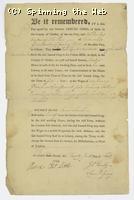
Piecers had to tie the yarn threads together when they broke during the spinning processes, and they had to be quick, otherwise machines would have to be stopped, and they could be fined for wasting valuable production time. They also had to carry large cans of cotton yarn slivers from the carder to the drawing frame. Everyone tried to avoid this heavy work which was called 'having to carry the can' when someone was made to do it. Bessie and Marie worked as hard as they could, but Mr Bartlett was always grumbling and clearly thought they had been overpaid when they received their penny at the end of each week. Both of them thought this very unfair. They weren't supposed to be slaves like the black children they had heard about who were forced to work for nothing on the big American cotton plantations. The girls had also been told that they were lucky to be learning a useful trade but neither of them believed this any more. They both knew that they were little more than cheap labour, and they hated the mill, but they knew they were better off than a lot of children. Someone had told them horrific stories about being forced to work in a place called Ancoats where there was so much smoke from the chimneys that you never saw the sun. At least their mill was in a country village. Eyewitness account of child workers in the mills... (Southey, Robert. Letters from England. Spain, 1808) 'The guide remarked "that...poor children are a burden to their parents and to the parish...here [in a cotton mill] they get their bread almost as soon as they can run about, and by the time they are seven or eight years old bring in money...they come at five in the morning; we allow them half an hour for breakfast, and an hour for dinner; they leave work at six, and another set relieves them for the night; the wheels never stand still..." I was looking, while he spoke, at the unnatural dexterity with which the fingers of these little creatures were playing in the machinery, half giddy myself with the noise and the endless motion; and...I thought that if Dante had peopled one of his hells with children, here was a scene worthy to have supplied him with new images of torment...' |
 | |
| Associated Objects | |
| |
| Related Narratives | |
| |
