




Holidays Learning Journey
Holidays as we know them today were an invention of the industrial revolution. Before the factory people did not think of leaving their village and home for a week to stay elsewhere, they had chores and animals that could not be left alone.
Holy days were single days of celebrations, and the entertainment would travel to the people in the form of a travelling fair or troupe of players, which would set up on the village green and entertain for a few coppers or some food and drink.
The factories, with their unhealthy atmosphere and long days of work provided no time for enjoyment, the only days of freedom allowed were Sundays, Christmas Day and Good Friday.
So how did holidays as we know them develop? Follow the learning journey to see how our great grandparents celebrated and saved for their leisure time.
Click on the steps below to explore.
 |  |  |  |  |  |
|
Holidays learning journey Step 5: Wakes Week.
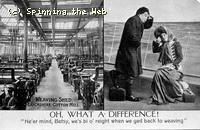
Holidays as we know them did not exist, and the old celebrations from the days before the factories were a distant memory. After the Factory Acts conditions slowly improved and working hours were reduced until the ten hour day was the norm, with Saturday afternoon and Sundays free. By 1870 the idea of a week's holiday for factory workers, albeit unpaid, was beginning to be accepted. As it was more cost effective for the mill to shut down and give everyone a week off, it became usual for all the mills in one area to close together. Reviving the old name for celebrations this became "Wakes Week". With all the mills closed, other businesses found themselves redundant, and carriers found new uses for their carts by converting them to people carriers, advertising day excursions to the newly fashionable "health resorts" by the sea. Train companies provided special Wakes excursion trains, as each town closed for its own Wakes Week. People began to save a small amount each week in excursion funds to pay for their yearly extravagance, and soon people would go to the seaside for a whole week, to "clear the lungs" breathing the sea air, and enjoying the entertainments provided at the new resorts like Morecambe and Blackpool. Did your grandparents spend their holidays at the seaside when they were young? What did the seaside towns do to encourage people to spend their time and money? |
 | |
| Associated Objects | |
| |
| Related Narratives | |
| |


